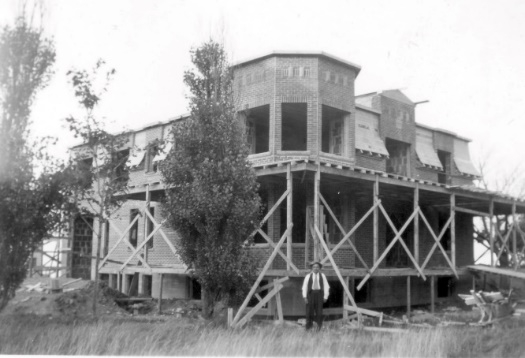
In the organizational structure of all Catholic parishes, the rectory is usually built on parish land near the church.
By definition, the rectory is the residence of the parish priest or his assistants (vicars). In most cases, the parish affairs are conducted from the rectory. The priests who live there work on the pastoral tasks of the community and generally operate an office where parishioners can meet with the parish priest or his vicar for various pastoral needs.
In Caraquet, when construction began on the current church in 1858, it was already known that a very comfortable rectory had been built in 1849. According to historian Rosemonde Cormier, Father Paquet said this about it upon its construction: “The people of Caraquet are building me a beautiful rectory, 37 by 37 feet, with a kitchen at the back measuring 20 feet. I have never seen such zeal!” This rectory housed our priests for nearly a century before being destroyed by fire in 1948.
Under the direction of Father Théophile Haché, an attempt was made to obtain a plan from the diocese and the new presbytery was inaugurated in 1949. Victorian in inspiration, the imposing red brick building, in an architectural style typical of several presbyteries in Quebec and Acadia, is strikingly similar to that of Saint-Isidore, even though the latter was built in the 1920s.
Our rectory, spanning two full stories and surrounded by a splendid gallery, comprises a ground floor with a dining room, two living rooms, and offices for parish administration. A large and comfortable kitchen completes this level. The second floor offers several bedrooms, including one reserved for the Bishop, as well as quarters for the housekeeper. Currently, rooms in the basement are still used for meetings and catechism classes. The Scouts also used the building in the 1950s.
The rectory, impressively splendid, is a valuable heritage building that must be preserved. To avoid the tragedies seen in other parishes, the parish council and the Caraquet municipal council have begun discussions to ensure that this building can continue to be a source of pride for the residents and to play its role in the community.
Bernard Thériault, historian
Sources: Rosemonde Cormier
Photos: Yvon Cormier
Excerpt from the newsletter “Builders,” February 2022, number 18